Quick takeaways
- Provider names matter less than the trusted handoff from payment confirmation to membership state.
- Do not claim a native integration unless the actual backend path is verified.
- Access codes are useful when checkout happens in PayPal, Shopify, Gumroad, Patreon, invoices, or another external surface.
- Every provider flow still needs Telegram identity matching, expiry policy, support lookup, and failure handling.
Plan PayPal, Shopify, Gumroad, Patreon, manual invoice, and other checkout handoffs into Telegram access without claiming unsupported native integrations.
Use this guide when checkout, webhooks, renewals, invoices, or external payment evidence must become a reliable Telegram access event.
Next read: Telegram Payment Link to Group Access: Safer Checkout Handoffs.
How this guide was produced
Every guide is written for the same paid-access workflow: payment evidence, Telegram identity, plan status, support lookup, and expiry enforcement.
Published by KickThemBot from product documentation, launch runbooks, integration tests, and paid-access operating procedures.
Payment-handoff planning: Stripe, crypto, website checkout, server-side events, access-code redemption, renewals, and support evidence. Automation may assist drafting and page generation; indexed guides are selected for a distinct user job and reviewed against the documented workflow. Claims avoid fake rankings and hidden guarantees.
To help admins make a safer access decision before moving members, payments, invite paths, or expiry rules.
Implementation steps
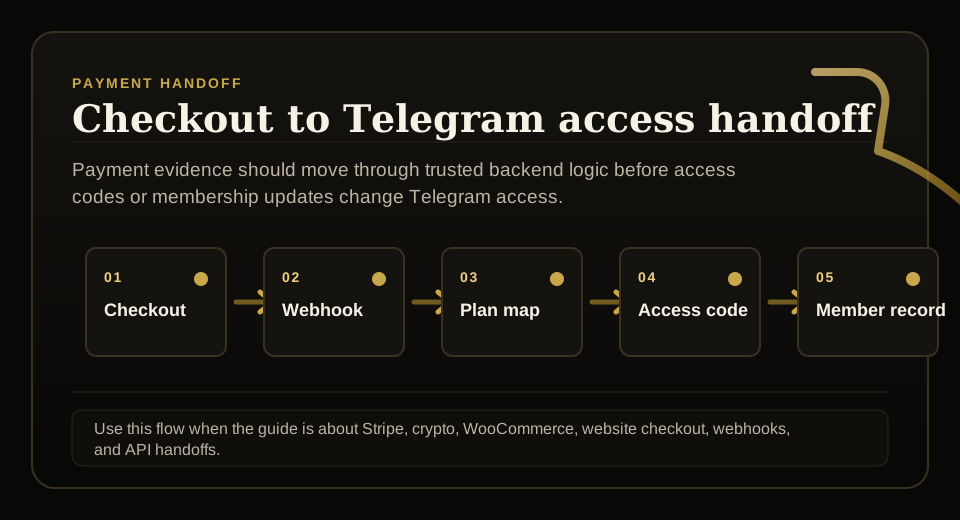
- Identify the checkout source and the event that proves payment is confirmed.
- Decide whether the handoff creates an access code, updates an existing membership, or opens support review.
- Keep API keys and payment verification in trusted backend or secure connector settings.
- Test duplicate events, refunds, cancellations, wrong Telegram accounts, and expired approval links.
Use a handoff pattern, not a provider promise
PayPal, Shopify, Gumroad, Patreon, forms, invoices, and custom checkout pages all create different payment evidence.
The access system should receive a trusted signal from whichever source is actually used, then create or update Telegram membership state.
Bridge external checkout with access codes
When checkout happens outside Telegram, a controlled access code can route the buyer into the bot and bind the purchase to the right Telegram account.
The code should carry plan, duration, destination, expiry window, and redemption limits.
Treat provider-specific flows carefully
A public page should not say a provider is natively integrated unless the product has a verified implementation path.
A safer and more durable page explains what a PayPal, Shopify, Gumroad, Patreon, or invoice workflow must prove before Telegram access changes.
Design for refunds, cancellations, and retries
Checkout systems can refund, cancel, retry, duplicate events, or delay confirmation. Those cases should not create uncontrolled access.
Support should see whether the issue is payment state, code redemption, Telegram identity, expiry, or manual review.
FAQ
Can PayPal, Shopify, Gumroad, or Patreon grant Telegram access?
They can participate in a workflow when confirmed payment evidence is handed to a trusted backend, access code, or membership update. Do not assume native access control without verifying the integration path.
What is the safest checkout integration pattern for Telegram access?
Confirm payment in the checkout source, create an access code or membership update from trusted backend logic, then bind access to the member's Telegram identity.