Quick takeaways
- No-code automation is useful for handoffs, notifications, and support tasks.
- Access decisions should still use trusted events and server-side API keys.
- Automations need idempotency, logging, and failure handling before live members depend on them.
- Zapier and Make should complement the membership source of truth, not replace it.
Plan Zapier, Make, and no-code automation for Telegram membership workflows without exposing API keys, skipping payment verification, or breaking access state.
Use this guide when checkout, webhooks, renewals, invoices, or external payment evidence must become a reliable Telegram access event.
Next read: No-Code Telegram Membership Bot Setup for Paid Communities.
How this guide was produced
Every guide is written for the same paid-access workflow: payment evidence, Telegram identity, plan status, support lookup, and expiry enforcement.
Published by KickThemBot from product documentation, launch runbooks, integration tests, and paid-access operating procedures.
Payment-handoff planning: Stripe, crypto, website checkout, server-side events, access-code redemption, renewals, and support evidence. Automation may assist drafting and page generation; indexed guides are selected for a distinct user job and reviewed against the documented workflow. Claims avoid fake rankings and hidden guarantees.
To help admins make a safer access decision before moving members, payments, invite paths, or expiry rules.
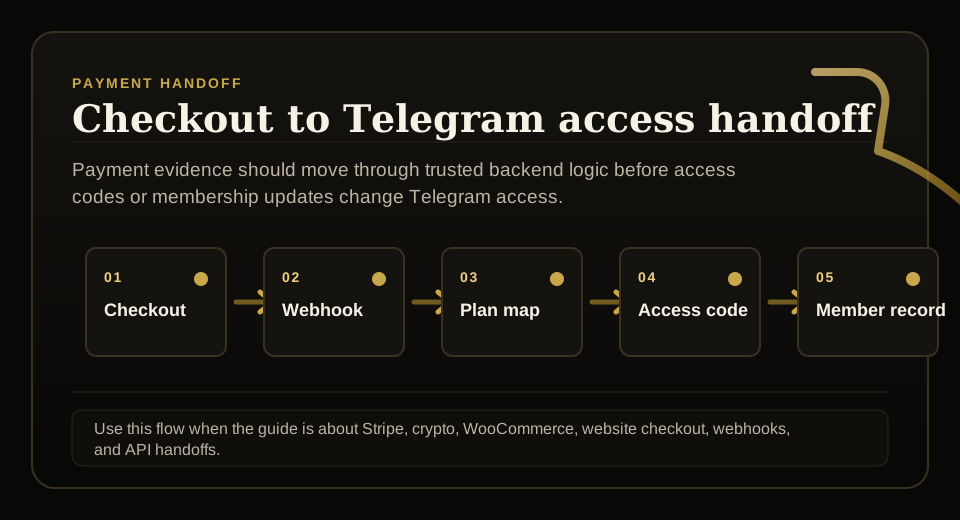
Implementation steps
- List the automation trigger: payment confirmed, access code created, member expired, support case opened, or renewal reminder needed.
- Decide whether the action is informational or changes Telegram access.
- Keep API keys and payment verification in trusted backend or secure connector settings.
- Test retries, duplicate events, failed steps, wrong account recovery, and support logging before launch.
Use no-code tools for safe handoffs
Zapier and Make are useful for sending notifications, creating support tasks, copying status to a CRM, or alerting admins about renewal risk.
Those jobs help operations without directly exposing a private Telegram group.
Be careful with access-changing steps
Creating access codes, extending expiry, or removing members should happen only after the automation trusts the event that triggered it.
Payment confirmation, API keys, and membership updates should not leak into public frontend code or unsupported browser actions.
Plan duplicate and failed events
No-code workflows can retry, duplicate, or partially fail. Paid access workflows need idempotency so one payment does not create multiple uncontrolled access paths.
Every failed automation should leave a support-visible case.
Keep one membership source of truth
A spreadsheet, CRM, payment tool, and Telegram bot can all participate in the workflow, but one system should decide current access state.
Zapier and Make should move signals into that source of truth rather than becoming the source themselves.
FAQ
Can Zapier or Make automate Telegram membership access?
They can help with handoffs and some backend-connected workflows, but access changes should use trusted payment events, secure API keys, logging, and tested failure handling.
What is risky about no-code Telegram membership automation?
The main risks are exposed API keys, unverified payment triggers, duplicate events, partial failures, missing support logs, and automations that bypass the membership source of truth.