Quick takeaways
- Webhook handlers should verify events before changing membership status.
- The backend should map Stripe products or prices to Telegram membership plans.
- Access-code creation belongs server side after trusted confirmation.
- Subscription lifecycle events should update renewal, cancellation, refund, and expiry state.
A developer-friendly guide to using Stripe webhooks for Telegram access handoff with backend confirmation, access-code creation, renewals, and removals.
Use this guide when checkout, webhooks, renewals, invoices, or external payment evidence must become a reliable Telegram access event.
Next read: Stripe Telegram Subscription Bot: Website Checkout to Private Access.
How this guide was produced
Every guide is written for the same paid-access workflow: payment evidence, Telegram identity, plan status, support lookup, and expiry enforcement.
Published by KickThemBot from product documentation, launch runbooks, integration tests, and paid-access operating procedures.
Payment-handoff planning: Stripe, crypto, website checkout, server-side events, access-code redemption, renewals, and support evidence. Automation may assist drafting and page generation; indexed guides are selected for a distinct user job and reviewed against the documented workflow. Claims avoid fake rankings and hidden guarantees.
To help admins make a safer access decision before moving members, payments, invite paths, or expiry rules.
Implementation steps
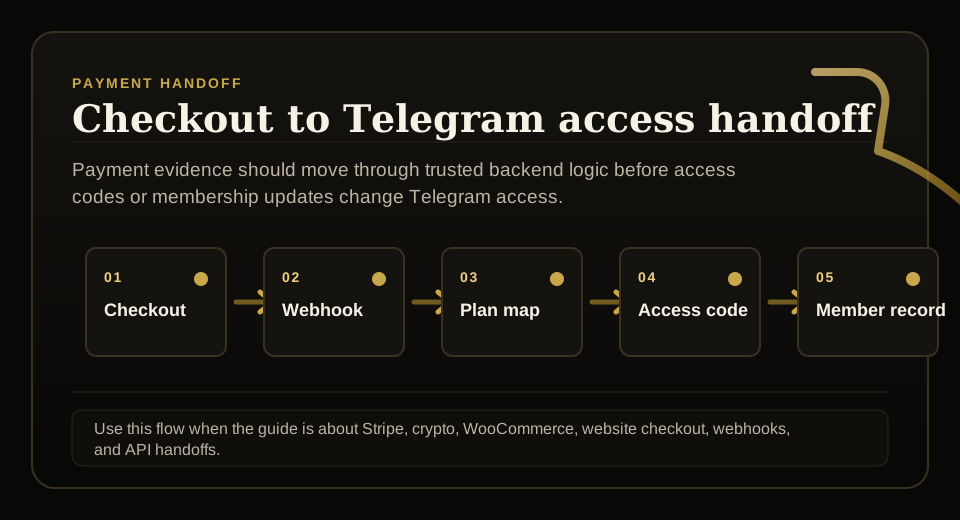
- Verify the Stripe webhook event in trusted backend code.
- Map the Stripe customer, product, price, or subscription to the correct membership plan.
- Create an access code or update membership status through the membership API.
- Log the event, resulting membership state, and support-safe reference for later lookup.
Verify the event before access changes
A webhook should be verified by backend code before it creates access. Frontend redirects, client-side state, and email screenshots are not enough for automated access.
Once verified, the handler can translate the payment event into a membership update.
See Stripe's official webhook documentation for signature verification and event handling: https://stripe.com/docs/webhooks
Map Stripe products to membership plans
Every Stripe product or price used for Telegram access should map to a plan, duration, destination, renewal rule, and support expectation.
Keep that mapping maintainable so product changes do not silently grant the wrong Telegram access.
Create codes from trusted backend code
The webhook handler can call the membership API to create an access code after payment confirmation. That API key should stay in backend configuration.
The code can then be delivered through email, account page, support, or a trusted handoff path.
Handle the full subscription lifecycle
The first checkout event is only one case. Renewal, failed payment, cancellation, refund, dispute, and manual extension events should all keep membership status aligned.
Support should see the webhook source and the current Telegram access outcome.
FAQ
Can a Stripe webhook grant Telegram access?
Yes, trusted backend code can use verified Stripe events to create access codes or update membership status before Telegram access is granted.
Can a static site call the membership API after Stripe checkout?
No. API keys should stay server side. Use backend webhook handlers or trusted server code for access-code creation and membership updates.