Quick takeaways
- The membership database should center on access decisions, not random notes.
- Core fields include member identity, plan, status, expiry, access source, and Telegram identity.
- Support notes should explain access changes without exposing unnecessary sensitive data.
- Removal and manual override history help resolve disputes later.
Design a Telegram group membership database around member identity, plan, payment source, expiry, reminders, access codes, support notes, and removal history.
Use this guide when the membership record, member status, plan, renewal, or support view has to settle the access decision.
Next read: Telegram Subscriber Management for Paid Communities.
How this guide was produced
Every guide is written for the same paid-access workflow: payment evidence, Telegram identity, plan status, support lookup, and expiry enforcement.
Published by KickThemBot from product documentation, launch runbooks, integration tests, and paid-access operating procedures.
Membership lifecycle planning: plan setup, Telegram identity, subscriber status, renewals, support lookup, and expiry enforcement. Automation may assist drafting and page generation; indexed guides are selected for a distinct user job and reviewed against the documented workflow. Claims avoid fake rankings and hidden guarantees.
To help admins make a safer access decision before moving members, payments, invite paths, or expiry rules.
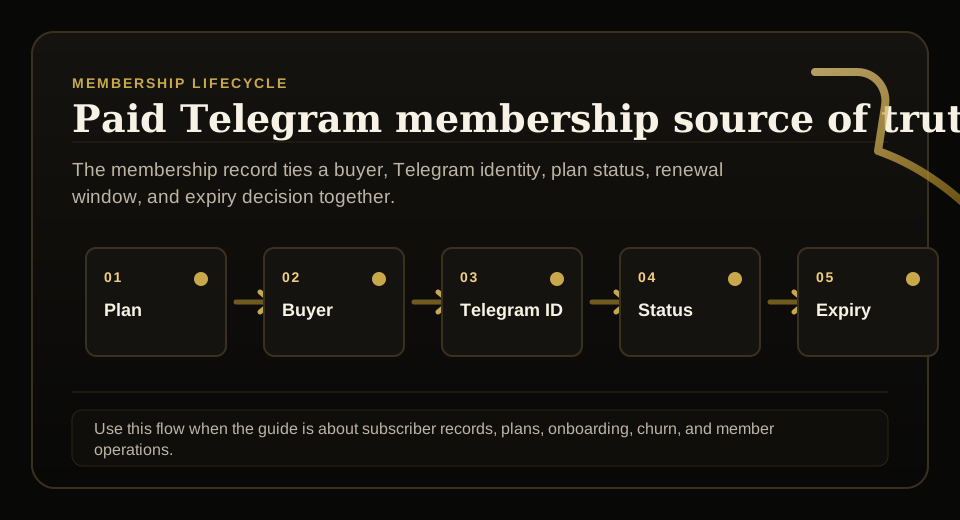
Core fields for paid access
The practical starting fields are membership ID, plan, status, expiry date, payment source, access-code reference, Telegram user ID, username, destination groups or channels, and current access outcome.
These fields answer the most important support question: should this person have access right now?
Store stable identity where available
Visible usernames and display names are useful context, but they can change. Telegram user ID, payment reference, website user ID, email, and access-code redemption can provide stronger matching signals.
The goal is not to collect everything. It is to store enough evidence to avoid wrong access decisions.
Track the access history
A membership database should record important events: created, code redeemed, reminder sent, renewed, failed payment, manually extended, cancelled, expired, removed, refunded, and support recovered.
This event history lets support explain what happened instead of searching chat logs.
Keep the database operational and lean
Do not turn the access database into a dumping ground for sensitive payment screenshots, private chat history, or unrelated customer data.
Store what the access workflow needs, keep secrets out of public pages, and use secure backend storage for API keys or payment evidence.
FAQ
What should a Telegram group membership database include?
It should include member identity, plan, status, expiry, Telegram user ID where available, payment or access source, reminders, support notes, and removal history.
Should Telegram username be the database key?
No. Usernames can change. Use a stable membership record and store Telegram user ID where available.