Quick takeaways
- Keep the record useful: member search, profile summary, active plan, paid-through date, support cases, renewal risk, and last access action.
- Bind it to identity: Telegram ID, email, web user ID, payment reference, project, group/channel, and duplicate-account clues.
- Separate evidence from truth: profile fields, membership status, payment references, support notes, account-recovery history, access exceptions, and removal proof.
- Keep the boundary clear: avoid dashboards that surface many notes but hide the source that controls access.
Use Telegram member CRM dashboard to keep paid Telegram member records, identity, support notes, payment evidence, promises, risk, and access decisions connected without letting CRM notes become the source of truth.
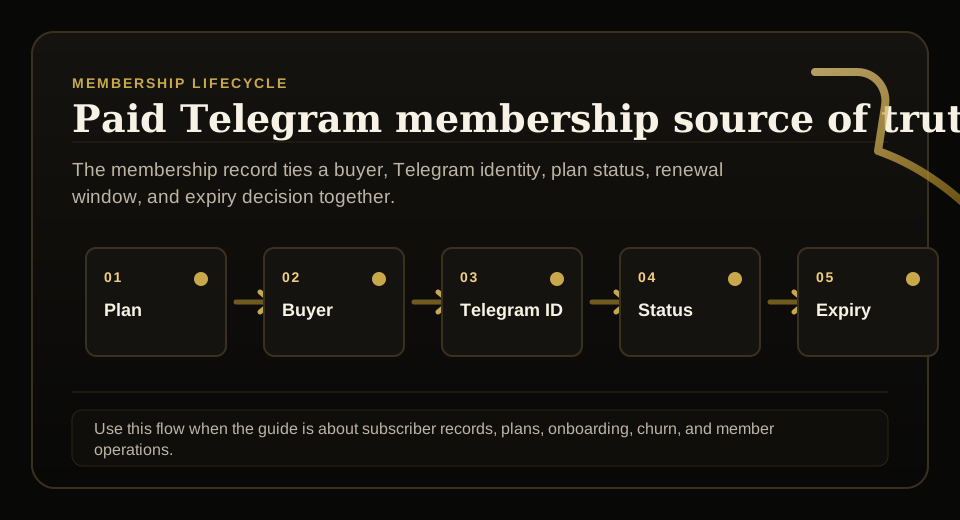
Use this guide when the membership record, member status, plan, renewal, or support view has to settle the access decision.
Next read: Telegram Paid Group Member Search Tool.
How this guide was produced
Every guide is written for the same paid-access workflow: payment evidence, Telegram identity, plan status, support lookup, and expiry enforcement.
Published by KickThemBot from product documentation, launch runbooks, integration tests, and paid-access operating procedures.
Membership lifecycle planning: plan setup, Telegram identity, subscriber status, renewals, support lookup, and expiry enforcement. Automation may assist drafting and page generation; indexed guides are selected for a distinct user job and reviewed against the documented workflow. Claims avoid fake rankings and hidden guarantees.
To help admins make a safer access decision before moving members, payments, invite paths, or expiry rules.
Implementation steps
- Define the CRM job for member CRM dashboard: let support open one dashboard before deciding restore, extend, escalate, or remove.
- Attach each record to a stable member identity: Telegram ID, email, web user ID, payment reference, project, group/channel, and duplicate-account clues.
- Store evidence and review state before support acts: profile fields, membership status, payment references, support notes, account-recovery history, access exceptions, and removal proof.
- Document the access boundary: avoid dashboards that surface many notes but hide the source that controls access.
Start with one member record
Support should not have to reconstruct a member from payment inboxes, Telegram usernames, old promises, and scattered admin memory.
For this workflow, the record should cover member search, profile summary, active plan, paid-through date, support cases, renewal risk, and last access action.
Bind notes to stable identity
Telegram usernames can change and payment buyers may use different emails. CRM context becomes useful only when it connects to the member identity that controls access.
The identity model should include Telegram ID, email, web user ID, payment reference, project, group/channel, and duplicate-account clues.
Separate evidence from official truth
A support note, screenshot, AI summary, or payment clue can help review a case. It should not silently grant or remove paid access on its own.
The record should preserve profile fields, membership status, payment references, support notes, account-recovery history, access exceptions, and removal proof.
Turn context into safe action
The best CRM pages reduce support mistakes because they show what the admin can decide, what still needs review, and which system owns the final access state.
The operating job is to let support open one dashboard before deciding restore, extend, escalate, or remove, while the page should avoid dashboards that surface many notes but hide the source that controls access.
FAQ
What is Telegram member CRM dashboard?
It is a dashboard that gives admins one reviewable member record before they change support or Telegram access.
Can a CRM note grant Telegram access?
No. CRM notes can guide support review, but Telegram access should still resolve through membership status, payment evidence, Telegram identity, support approval, and removal or recovery proof.