Quick takeaways
- Define the duration surface: daily expiry queue, upcoming renewals, grace periods, manual exceptions, VIP expiries, annual renewals, and removal due dates.
- Keep access codes precise: calendar entries linked back to access-code source, plan duration, redemption date, and removal proof.
- Plan support around real member questions: operators who need to see which members require reminders, review, removal, or owner-approved exceptions.
- Keep the claim boundary clear: avoid relying on a calendar if it is not reconciled to membership status and actual Telegram presence.
Use Telegram membership expiry calendar to define paid Telegram plan length, access-code duration, renewal timing, support evidence, and expiry removal without relying on admin memory.
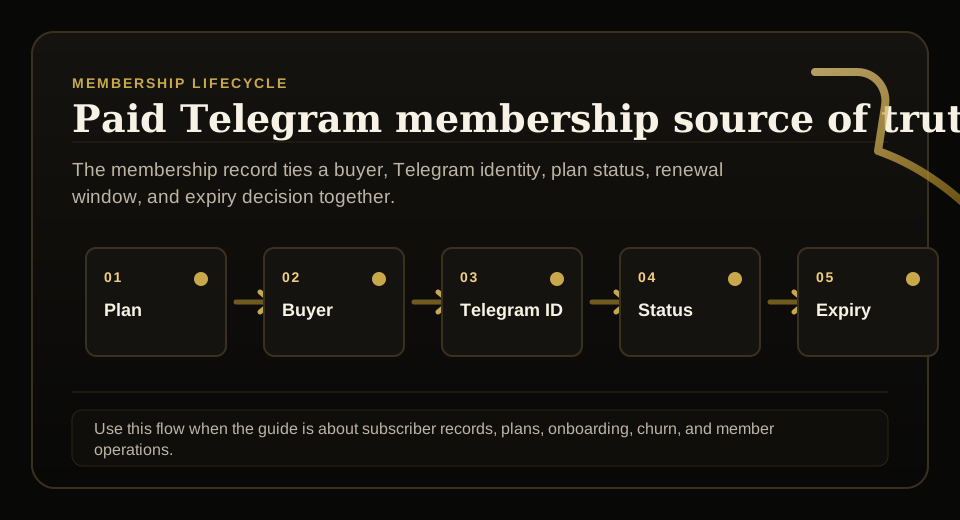
Use this guide when the membership record, member status, plan, renewal, or support view has to settle the access decision.
Next read: Telegram Expiry Tracker Bot: Know Who Should Lose Access.
How this guide was produced
Every guide is written for the same paid-access workflow: payment evidence, Telegram identity, plan status, support lookup, and expiry enforcement.
Published by KickThemBot from product documentation, launch runbooks, integration tests, and paid-access operating procedures.
Membership lifecycle planning: plan setup, Telegram identity, subscriber status, renewals, support lookup, and expiry enforcement. Automation may assist drafting and page generation; indexed guides are selected for a distinct user job and reviewed against the documented workflow. Claims avoid fake rankings and hidden guarantees.
To help admins make a safer access decision before moving members, payments, invite paths, or expiry rules.
Implementation steps
- Name the duration rules for membership expiry calendar: daily expiry queue, upcoming renewals, grace periods, manual exceptions, VIP expiries, annual renewals, and removal due dates.
- Map code generation and redemption: calendar entries linked back to access-code source, plan duration, redemption date, and removal proof.
- Prepare support evidence before launch: operators who need to see which members require reminders, review, removal, or owner-approved exceptions.
- Document the unsafe assumption to avoid: avoid relying on a calendar if it is not reconciled to membership status and actual Telegram presence.
Define the duration surface
One-month, six-month, twelve-month, annual, and lifetime plans should not be buried in notes or remembered by a single admin.
For this workflow, the duration surface is daily expiry queue, upcoming renewals, grace periods, manual exceptions, VIP expiries, annual renewals, and removal due dates.
Tie every code to a plan duration
Access codes are useful only when the code tells support what membership record, protected destination, and expiry behavior should exist after redemption.
The access-code rule should include calendar entries linked back to access-code source, plan duration, redemption date, and removal proof.
Prepare support before expiry
Longer plan durations create different support issues from short trials or monthly renewals. The support view should show remaining time, proof source, and next action.
Support should be ready for operators who need to see which members require reminders, review, removal, or owner-approved exceptions.
Prove expiry and removal
Duration pages are useful only if they help the owner decide who should be inside, who should be reminded, who needs review, and who must be removed.
The boundary is to avoid relying on a calendar if it is not reconciled to membership status and actual Telegram presence.
FAQ
What is Telegram membership expiry calendar?
It is an operations view of upcoming paid Telegram expiries, renewals, removals, and exceptions.
Why do plan durations need separate access rules?
Because each duration changes renewal timing, reminder copy, support lookup, access-code validity, paid-through dates, and when the bot should remove expired Telegram members.