Quick takeaways
- Define the plan scope: free, monthly, six-month, annual, VIP, private, lifetime, and manually approved access tiers.
- Make duration explicit: tier name, plan ID, price source, paid-through rule, access-code duration, renewal behavior, and removal date.
- Map access before launch: which Telegram groups, private channels, website areas, and support paths each tier should unlock.
- Keep the boundary clear: avoid tier labels that look clear in marketing but do not map to exact access, expiry, and removal rules.
Use Telegram membership tiers bot to map paid Telegram tiers, plan durations, access-code rules, destinations, renewals, and removals without confusing marketing labels with membership truth.
Use this guide when the membership record, member status, plan, renewal, or support view has to settle the access decision.
Next read: Multiple Telegram Membership Plans: Monthly, Yearly, Lifetime.
How this guide was produced
Every guide is written for the same paid-access workflow: payment evidence, Telegram identity, plan status, support lookup, and expiry enforcement.
Published by KickThemBot from product documentation, launch runbooks, integration tests, and paid-access operating procedures.
Membership lifecycle planning: plan setup, Telegram identity, subscriber status, renewals, support lookup, and expiry enforcement. Automation may assist drafting and page generation; indexed guides are selected for a distinct user job and reviewed against the documented workflow. Claims avoid fake rankings and hidden guarantees.
To help admins make a safer access decision before moving members, payments, invite paths, or expiry rules.
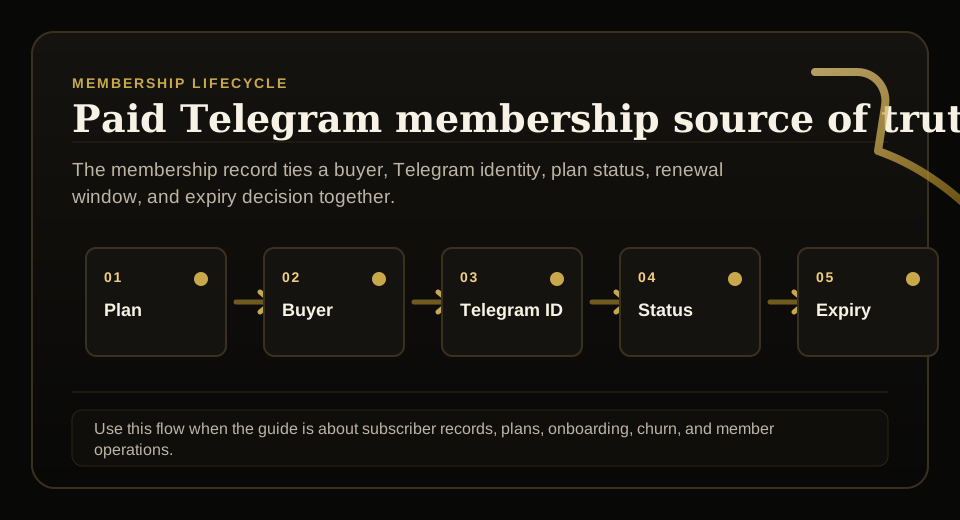
Implementation steps
- List the tier or plan variants: free, monthly, six-month, annual, VIP, private, lifetime, and manually approved access tiers.
- Define timing and expiry rules: tier name, plan ID, price source, paid-through rule, access-code duration, renewal behavior, and removal date.
- Map each tier to exact access destinations: which Telegram groups, private channels, website areas, and support paths each tier should unlock.
- Test the boundary before members enter: avoid tier labels that look clear in marketing but do not map to exact access, expiry, and removal rules.
Start with a tier map
A tier map turns marketing plan names into operational rules. It should show what each member bought, what it unlocks, and what happens at expiry.
For this workflow, the plan scope is free, monthly, six-month, annual, VIP, private, lifetime, and manually approved access tiers.
Make duration rules explicit
The KickThemBot planning notes call out one-month, six-month, twelve-month, and lifetime-style memberships. Those durations need exact dates, not admin memory.
The duration model should include tier name, plan ID, price source, paid-through rule, access-code duration, renewal behavior, and removal date.
Map tiers to Telegram destinations
Every tier should resolve to specific Telegram groups, private channels, website areas, and support paths before an access code or checkout flow goes live.
The access map should cover which Telegram groups, private channels, website areas, and support paths each tier should unlock.
Protect against wrong removals
Plan mistakes are not cosmetic. A wrong tier, missing expiry, or unclear lifetime exception can put the wrong person inside or remove the right person too early.
The operating goal is to turn tier choices into a precise membership source-of-truth record before access is granted, and the page should avoid tier labels that look clear in marketing but do not map to exact access, expiry, and removal rules.
FAQ
What is Telegram membership tiers bot?
It is a bot workflow that maps paid Telegram membership tiers to verified plans, durations, access destinations, renewal rules, and removal behavior.
Can a tier label control Telegram access by itself?
No. Tier labels are useful for admins and members, but access should resolve through membership state, payment evidence, Telegram identity, destination mapping, duration rules, and removal proof.