Quick takeaways
- Define the real roles first: current owner, new owner, implementation helper, billing admin, and protected support operator.
- Each role should have an explicit scope: bot ownership, project settings, payment handoff, protected destinations, access-code rights, and recovery contacts.
- Team access should preserve one membership source of truth rather than giving every helper direct group power.
- Owner handoff, support recovery, and admin-seat removal need proof before live members depend on the workflow.
Plan Telegram project owner handoff for paid Telegram operations with project scope, least-privilege roles, membership status, support evidence, and owner controls.
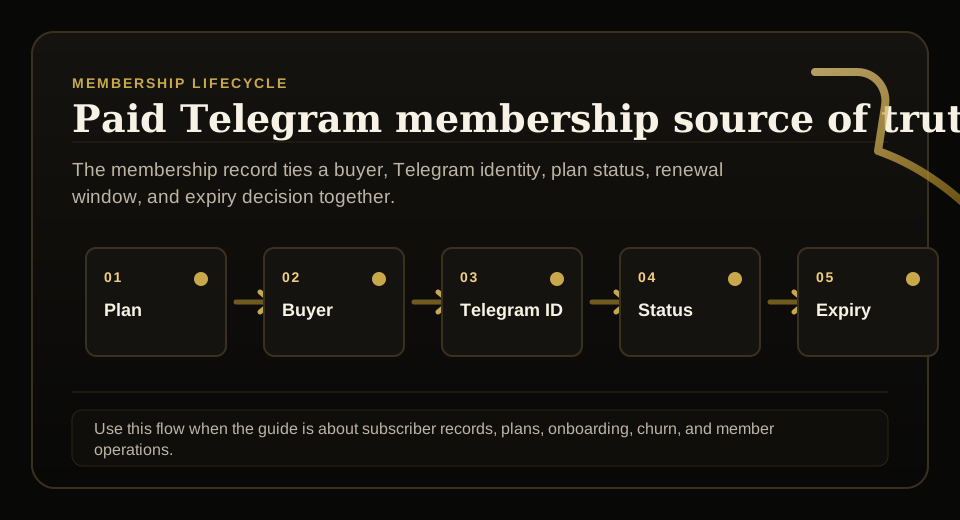
Use this guide when the membership record, member status, plan, renewal, or support view has to settle the access decision.
Next read: Telegram Group Admin Handoff for Paid Communities.
How this guide was produced
Every guide is written for the same paid-access workflow: payment evidence, Telegram identity, plan status, support lookup, and expiry enforcement.
Published by KickThemBot from product documentation, launch runbooks, integration tests, and paid-access operating procedures.
Membership lifecycle planning: plan setup, Telegram identity, subscriber status, renewals, support lookup, and expiry enforcement. Automation may assist drafting and page generation; indexed guides are selected for a distinct user job and reviewed against the documented workflow. Claims avoid fake rankings and hidden guarantees.
To help admins make a safer access decision before moving members, payments, invite paths, or expiry rules.
Implementation steps
- Map the role model for project owner handoff: current owner, new owner, implementation helper, billing admin, and protected support operator.
- Set project and data boundaries: bot ownership, project settings, payment handoff, protected destinations, access-code rights, and recovery contacts.
- Test the proof path: owner transfer, bot-admin rights, project settings review, support fallback, and old-owner removal.
- Review the failure modes: transferring access informally while old owners, helper accounts, or stale bot permissions remain active.
Name the team roles
Team access fails when every helper becomes a full owner by habit.
For this workflow, define who can act as current owner, new owner, implementation helper, billing admin, and protected support operator.
Scope each project and permission
A paid Telegram membership project should know which destinations, plans, member records, reports, and support queues each role can reach.
The permission boundary should describe bot ownership, project settings, payment handoff, protected destinations, access-code rights, and recovery contacts.
Prove sensitive actions
Adding a seat, changing a role, extending access, restoring a wrong account, or transferring ownership should leave enough evidence for support and owner review.
At minimum, test owner transfer, bot-admin rights, project settings review, support fallback, and old-owner removal.
Keep claim boundaries clear
A team-access workflow can make operations safer, but it is not a guarantee that every admin decision is correct or every external payment is verified.
The main risk to avoid is transferring access informally while old owners, helper accounts, or stale bot permissions remain active.
FAQ
What is Telegram project owner handoff?
It is the process for moving ownership of a Telegram membership project while preserving access rules, recovery paths, and old-owner removal.
Should every admin see payment and member data?
No. Use least-privilege project roles. Support may need member status and lookup evidence, while billing, exports, owner settings, and sensitive overrides should stay restricted.