Quick takeaways
- An admin action log should explain paid-access changes without claiming full Telegram history or legal audit coverage.
- The useful evidence is member status, Telegram identity, payment or code source, expiry, support context, and access outcome.
- Failed removals, manual overrides, duplicate identity fixes, and support restores should be visible instead of hidden in chat memory.
- Access evidence should help admins decide the next safe action: restore, extend, retry, remove, reject, or escalate.
Use a Telegram admin action log for manual extensions, overrides, reactivations, support restores, identity changes, and removal decisions in paid communities.
Use this guide when the main risk is unsafe entry, leaked access, expired members staying inside, or admins changing permissions manually.
Next read: Telegram Admin Audit Log for Paid Access.
How this guide was produced
Every guide is written for the same paid-access workflow: payment evidence, Telegram identity, plan status, support lookup, and expiry enforcement.
Published by KickThemBot from product documentation, launch runbooks, integration tests, and paid-access operating procedures.
Access-control planning: private destinations, access codes, join paths, bot permissions, expiry policy, and removal tests. Automation may assist drafting and page generation; indexed guides are selected for a distinct user job and reviewed against the documented workflow. Claims avoid fake rankings and hidden guarantees.
To help admins make a safer access decision before moving members, payments, invite paths, or expiry rules.
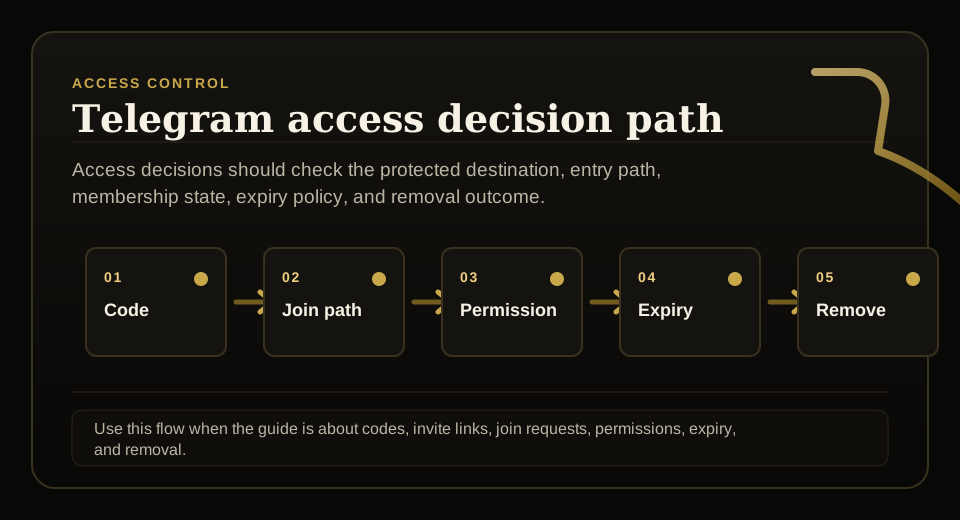
Implementation steps
- List the events that belong in the admin action log: manual extension, owner override, support restore, wrong-account change, refund exception, removal retry, reactivation, and destination change.
- Define the evidence fields support needs: admin role, reason, member identity, old status, new status, expiry change, support note, and action result.
- Use the history to decide: whether the manual change was authorized, time-bound, reversible, and visible to future support.
- Set claim boundaries and abuse checks: avoid undocumented manual access, permanent exceptions, and admin changes that bypass membership state.
Capture access-changing events
A paid Telegram community does not need every possible chat event to make better support decisions.
The admin action log should focus on access-changing events such as manual extension, owner override, support restore, wrong-account change, refund exception, removal retry, reactivation, and destination change.
Keep the evidence support can use
Support should not rely on usernames, screenshots, or memory when deciding paid access.
Useful evidence includes admin role, reason, member identity, old status, new status, expiry change, support note, and action result.
Turn history into the next safe action
The history should help admins make the next decision, not just preserve a vague archive.
A clear record helps decide whether the manual change was authorized, time-bound, reversible, and visible to future support.
Set honest claim boundaries
KickThemBot planning describes paid access, access codes, subscriber records, renewals, support lookup, and automatic removal. Do not turn that into unsupported claims about full CRM audit writes or complete Telegram history.
The page should avoid undocumented manual access, permanent exceptions, and admin changes that bypass membership state.
FAQ
What is a Telegram admin action log?
It records manual access-changing actions by admins so support can understand extensions, overrides, restores, and removal decisions.
Is a admin action log the same as a full compliance audit log?
No. Treat it as operational access evidence for paid Telegram support and owner review unless a product spec explicitly documents compliance-grade logging.