Quick takeaways
- Join requests should be checked against membership status, not handled by admin instinct.
- Private groups and correct bot permissions are prerequisites.
- Access codes can connect website buyers to the right Telegram identity.
- Support needs to know why a request was approved, pending, or denied.
How paid Telegram admins should think about join requests, private groups, approval rules, access codes, and subscriber status.
Use this guide when the main risk is unsafe entry, leaked access, expired members staying inside, or admins changing permissions manually.
Next read: Telegram Bot Admin Permissions for Paid Groups.
How this guide was produced
Every guide is written for the same paid-access workflow: payment evidence, Telegram identity, plan status, support lookup, and expiry enforcement.
Published by KickThemBot from product documentation, launch runbooks, integration tests, and paid-access operating procedures.
Access-control planning: private destinations, access codes, join paths, bot permissions, expiry policy, and removal tests. Automation may assist drafting and page generation; indexed guides are selected for a distinct user job and reviewed against the documented workflow. Claims avoid fake rankings and hidden guarantees.
To help admins make a safer access decision before moving members, payments, invite paths, or expiry rules.
Where join requests fit
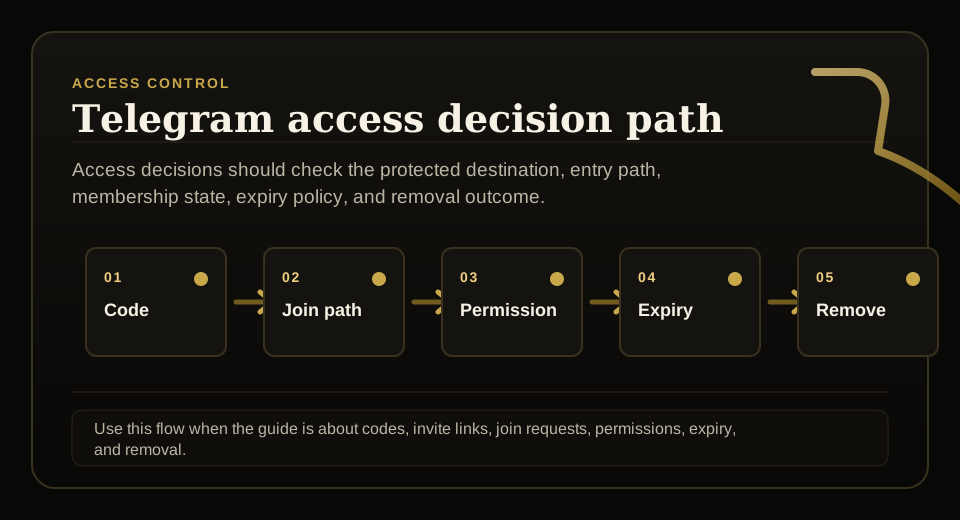
A join request is an access checkpoint. It can help keep a private group protected, but only if the bot can compare the requester to a known membership record.
For paid communities, the join decision should come from payment confirmation, access-code redemption, plan status, and expiry state.
Match the requester to a buyer
The hard part is identity. A buyer may use one email on the website and a different username in Telegram. Access codes reduce that ambiguity by letting the buyer identify themselves through the bot.
Once the code is redeemed, the system can connect the Telegram user to the membership record.
Use pending states intentionally
Not every request should be instantly approved or rejected. Pending states are useful when payment confirmation has not arrived, the member used the wrong account, or support needs to intervene.
The key is that pending should mean something specific, not simply that an admin has not checked Telegram yet.
Test requests before launch
Before publishing a paywall, test a paid buyer, a non-buyer, an expired member, and a user who redeems a code from a second Telegram account.
These tests show whether the join request flow protects access or just creates another manual queue.
FAQ
Can a bot approve Telegram join requests automatically?
A bot can help handle join requests when it has the right permissions and a reliable membership record to check.
Should paid groups use public invite links or join requests?
Private access with controlled joins is safer. Public invite links can spread unless they are limited, rotated, and backed by membership checks.