Quick takeaways
- Anti-raid moderation should slow suspicious joins without deleting the membership source of truth.
- Join requests, CAPTCHA, and temporary restrictions need a recovery path for paid members.
- Telegram identity should remain connected to plan, status, support notes, and access decisions.
- Admins need proof of who was blocked, approved, removed, or restored after the raid window.
Use a Telegram anti-raid bot without breaking paid membership access, Telegram identity checks, join requests, moderation policy, support recovery, and removal proof.
Use this guide when the main risk is unsafe entry, leaked access, expired members staying inside, or admins changing permissions manually.
Next read: Telegram Anti-Spam Bot for Paid Groups: Where It Fits.
How this guide was produced
Every guide is written for the same paid-access workflow: payment evidence, Telegram identity, plan status, support lookup, and expiry enforcement.
Published by KickThemBot from product documentation, launch runbooks, integration tests, and paid-access operating procedures.
Access-control planning: private destinations, access codes, join paths, bot permissions, expiry policy, and removal tests. Automation may assist drafting and page generation; indexed guides are selected for a distinct user job and reviewed against the documented workflow. Claims avoid fake rankings and hidden guarantees.
To help admins make a safer access decision before moving members, payments, invite paths, or expiry rules.
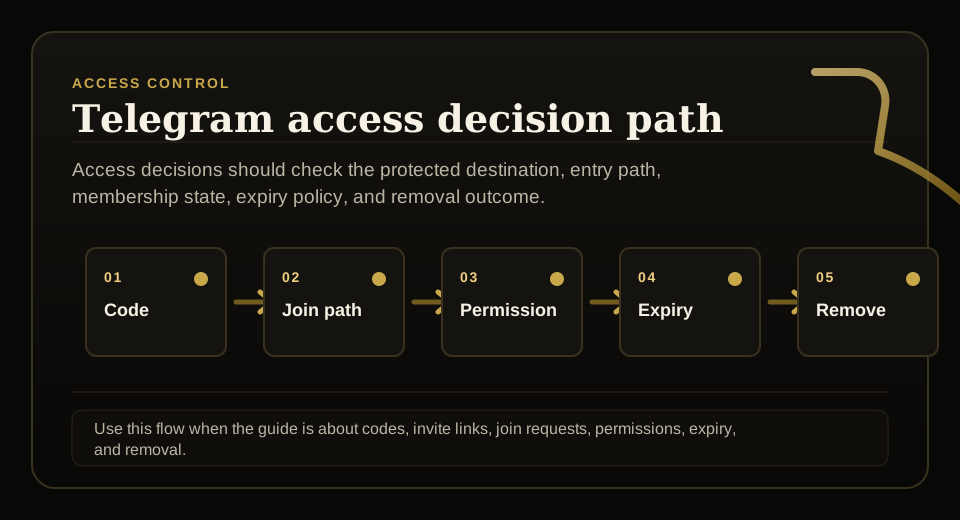
Implementation steps
- Define what counts as a raid: burst joins, repeated links, duplicate names, spam keywords, or suspicious accounts.
- Choose temporary restrictions that protect the chat while preserving paid-member lookup and support review.
- Connect every approved recovery to Telegram identity, membership status, plan, expiry, and access destination.
- Test raid mode, legitimate paid joins, wrong-account recovery, expired members, and post-raid audit logs.
Separate raid defense from membership access
A raid defense can pause joins or restrict new users, but membership access should still come from the paid record.
If moderation state overwrites membership state, a real buyer can be stranded without support context.
Use join control during bursts
Join requests, CAPTCHA, and temporary approval queues are safer than sharing a permanent invite link during an attack.
The bot should record whether a block was anti-raid, expired membership, or manual admin action.
Keep Telegram identity visible
A paid member who gets caught in raid mode should be recoverable by Telegram identity, payment evidence, and plan status.
Usernames alone are too weak for support during high-volume moderation events.
Review the post-raid access outcome
After the raid window, admins should review blocked paid members, accidental approvals, expired accounts, and failed removals.
That audit keeps moderation from creating silent access drift.
FAQ
Should a paid Telegram group use an anti-raid bot?
Yes, if raid controls are tied to support review and do not replace membership status, Telegram identity, expiry, or access evidence.
Can anti-raid mode block real paid members?
It can. That is why admins need lookup by Telegram identity, membership status, payment evidence, and a recovery path before enabling strict moderation.