Quick takeaways
- Telegram Group Settings for Paid Access should be tied to membership state, not treated as a one-off Telegram preference.
- The setup work should set the group to a private paid-access workflow, decide whether join requests or invite links control entry, and document which bot actions are allowed.
- Useful proof includes group privacy state, protected destination, bot admin rights, invite-link policy, join-request mode, test member, and removal proof.
- Claim boundaries matter: avoid treating public group settings or loose invite links as a paid membership system.
Configure Telegram group settings for paid access with privacy, join requests, bot permissions, invite safety, member lookup, and removal testing.
Use this guide when the main risk is unsafe entry, leaked access, expired members staying inside, or admins changing permissions manually.
Next read: Telegram Private Channel Admin Rights for Paid Access.
How this guide was produced
Every guide is written for the same paid-access workflow: payment evidence, Telegram identity, plan status, support lookup, and expiry enforcement.
Published by KickThemBot from product documentation, launch runbooks, integration tests, and paid-access operating procedures.
Access-control planning: private destinations, access codes, join paths, bot permissions, expiry policy, and removal tests. Automation may assist drafting and page generation; indexed guides are selected for a distinct user job and reviewed against the documented workflow. Claims avoid fake rankings and hidden guarantees.
To help admins make a safer access decision before moving members, payments, invite paths, or expiry rules.
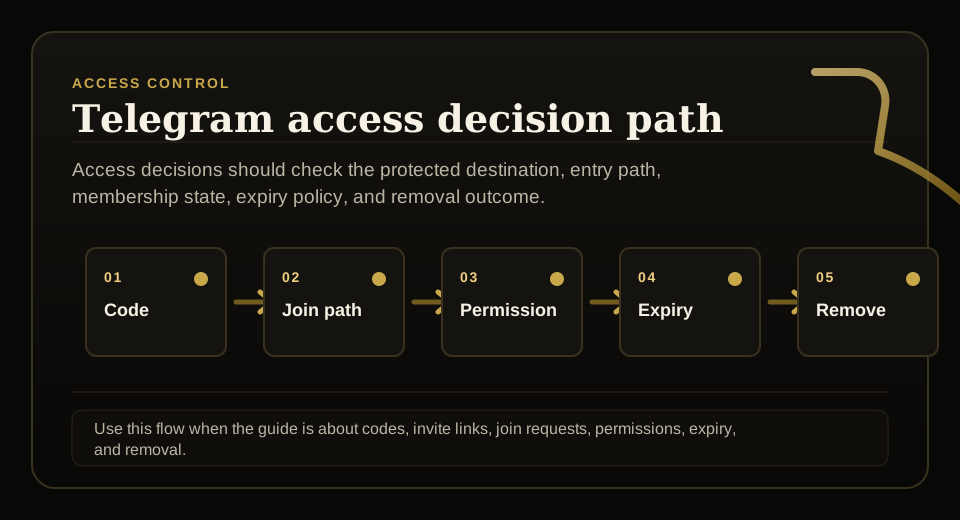
Implementation steps
- Define the paid-access setting: set the group to a private paid-access workflow, decide whether join requests or invite links control entry, and document which bot actions are allowed.
- Collect the setup proof: group privacy state, protected destination, bot admin rights, invite-link policy, join-request mode, test member, and removal proof.
- Test the member path, support path, and expired-access path before sending traffic.
- Set the safety boundary: avoid treating public group settings or loose invite links as a paid membership system.
Start with the paid-access decision
Telegram settings only matter when they support a real operating decision: who can enter, who can approve, who can remove, and how support proves the outcome.
For this group settings guide, the team should set the group to a private paid-access workflow, decide whether join requests or invite links control entry, and document which bot actions are allowed.
Record the setup evidence
A setup checklist should leave evidence that a future admin or support owner can inspect.
The useful setup proof is group privacy state, protected destination, bot admin rights, invite-link policy, join-request mode, test member, and removal proof.
Test access before launch
Planning notes for KickThemBot emphasize connecting channels, setting access codes, using Telegram ID, and testing member removal.
Treat the first setup as incomplete until a test member can redeem or request access, receive the correct destination, and lose access when the test expiry rule says they should.
Do not overclaim what settings can do
Settings can support paid access, but they do not replace payment evidence, membership records, support lookup, or tested bot permissions.
The page should avoid treating public group settings or loose invite links as a paid membership system.
FAQ
What is Telegram group settings for paid access?
Use private group settings, controlled entry, bot admin rights, tested invite or join-request behavior, support lookup, and expired-member removal before launch.
Can Telegram settings replace a membership bot?
No. Settings can protect the destination and guide entry, but paid access still needs membership state, Telegram identity, payment or code evidence, support lookup, and removal rules.