Quick takeaways
- Invite link leak prevention should reduce access leakage without claiming perfect abuse detection.
- The main risks are forwarded links, reused public links, expired buyers rejoining, wrong destination links, and untracked campaign links.
- Useful review signals include link name, issue source, expiration, join request, Telegram identity, membership status, and destination.
- Claim boundaries matter: avoid assuming Telegram invite links prove payment or that one static link can protect a paid community by itself.
Plan Telegram invite link leak prevention for paid groups with private destinations, controlled links, access-code handoff, join review, and link rotation.
Use this guide when the main risk is unsafe entry, leaked access, expired members staying inside, or admins changing permissions manually.
Next read: Telegram Invite Link Management for Paid Groups.
How this guide was produced
Every guide is written for the same paid-access workflow: payment evidence, Telegram identity, plan status, support lookup, and expiry enforcement.
Published by KickThemBot from product documentation, launch runbooks, integration tests, and paid-access operating procedures.
Access-control planning: private destinations, access codes, join paths, bot permissions, expiry policy, and removal tests. Automation may assist drafting and page generation; indexed guides are selected for a distinct user job and reviewed against the documented workflow. Claims avoid fake rankings and hidden guarantees.
To help admins make a safer access decision before moving members, payments, invite paths, or expiry rules.
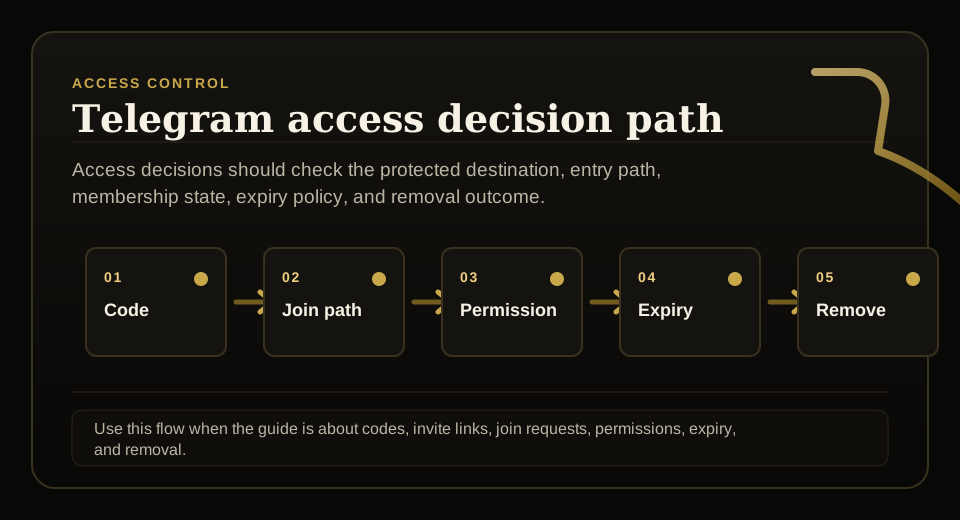
Implementation steps
- Define the abuse or leakage risk: forwarded links, reused public links, expired buyers rejoining, wrong destination links, and untracked campaign links.
- Collect the access evidence needed for review: link name, issue source, expiration, join request, Telegram identity, membership status, and destination.
- Choose the support-safe response: prefer controlled join paths, rotate exposed links, disable risky links, verify membership before approval, and log the access result.
- Set honest boundaries: avoid assuming Telegram invite links prove payment or that one static link can protect a paid community by itself.
Name the access risk first
Paid Telegram access abuse is easiest to handle when the team separates the specific risk from general moderation noise.
For this invite-link safety plan, watch for forwarded links, reused public links, expired buyers rejoining, wrong destination links, and untracked campaign links.
Review evidence before changing access
Support should not remove, restore, or approve access from a username or screenshot alone.
The useful signals are link name, issue source, expiration, join request, Telegram identity, membership status, and destination.
Choose the least risky access response
A good response protects the paid group without punishing valid members or hiding the outcome from future support.
The workflow should prefer controlled join paths, rotate exposed links, disable risky links, verify membership before approval, and log the access result.
Avoid unsupported abuse-detection claims
KickThemBot planning supports controlled paid access, access codes, membership records, support lookup, and expiry removal. That is enough to build strong access safety content without inventing surveillance features or guaranteed abuse detection.
The page should avoid assuming Telegram invite links prove payment or that one static link can protect a paid community by itself.
FAQ
What is Telegram invite link leak prevention?
It is the practice of limiting, tracking, rotating, and reviewing invite links so paid access does not leak beyond eligible members.
Can a Telegram bot automatically stop every abuse case?
No. A bot can help with controlled links, access-code redemption, join review, permissions, and removal, but support still needs policy, evidence, and review for edge cases.