Quick takeaways
- Buyer situation: a paid Telegram group owner preparing a bot or Mini App that collects member identity, payment evidence, support notes, and access logs.
- Trust rule: explain what the bot receives, why each field is needed, where support can review it, and how members can find the policy.
- Source-aware rule: Telegram's standard policy applies by default unless a developer publishes a separate privacy policy that better matches the service.
- Risk boundary: avoid copying a generic privacy page if the membership workflow stores Telegram IDs, payment references, access logs, or support notes.
Plan Telegram bot privacy policy paid groups for paid Telegram access with privacy, support, developer identity, dispute handling, data minimization, retention, and removal-proof safeguards.
Use this guide when support requests, tickets, shared inboxes, live chat, or escalation rules need to stay tied to membership status before access changes.
Next read: Telegram Membership Data Privacy: What Paid Groups Should Collect.
How this guide was produced
Every guide is written for the same paid-access workflow: payment evidence, Telegram identity, plan status, support lookup, and expiry enforcement.
Published by KickThemBot from product documentation, launch runbooks, integration tests, and paid-access operating procedures.
Support-operations planning: request intake, ticket state, assignment, SLA, member lookup, Telegram identity, escalation, and access outcome. Automation may assist drafting and page generation; indexed guides are selected for a distinct user job and reviewed against the documented workflow. Claims avoid fake rankings and hidden guarantees.
To help admins make a safer access decision before moving members, payments, invite paths, or expiry rules.
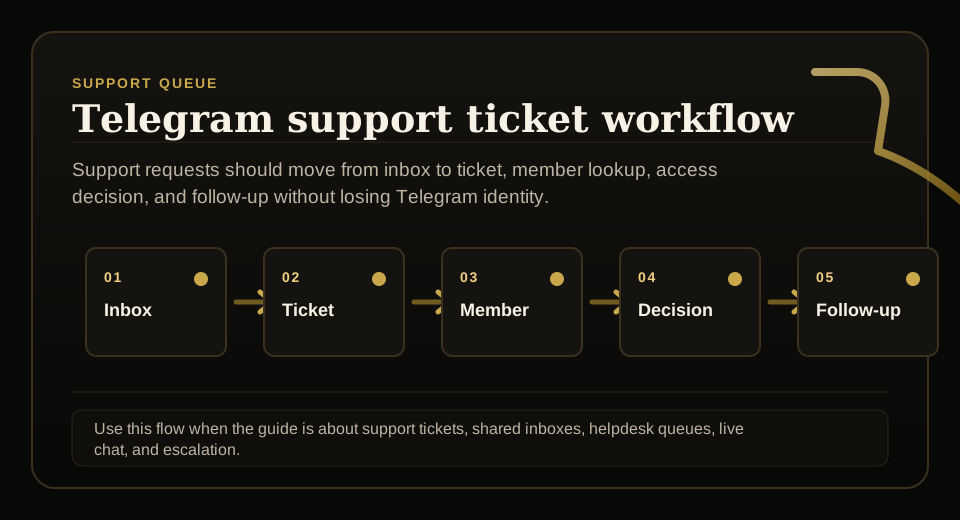
Implementation steps
- List the member-facing promise and the bot or Mini App surface where the member sees it.
- Apply the trust rule: explain what the bot receives, why each field is needed, where support can review it, and how members can find the policy.
- Prepare support before launch: support should answer privacy questions privately, not inside the paid group chat.
- Review the boundary before publishing: avoid copying a generic privacy page if the membership workflow stores Telegram IDs, payment references, access logs, or support notes.
Make the trust surface visible
Paid Telegram members need to know who operates the bot, where support happens, what data is used, and how payment or access disputes are handled.
explain what the bot receives, why each field is needed, where support can review it, and how members can find the policy
Map Telegram policy context to operations
Telegram's standard policy applies by default unless a developer publishes a separate privacy policy that better matches the service
That does not replace qualified legal review, but it does give the product team concrete surfaces to implement and test.
Give support the evidence path
support should answer privacy questions privately, not inside the paid group chat
Support should be able to answer without asking the member to expose private payment, identity, or account details in public chat.
Review before launch traffic arrives
Trust pages, commands, and support flows should be tested the same way checkout and expiry are tested.
avoid copying a generic privacy page if the membership workflow stores Telegram IDs, payment references, access logs, or support notes
FAQ
What is Telegram bot privacy policy paid groups?
It is the privacy page or policy path that explains how a paid Telegram bot handles member data, payment evidence, support context, and access logs.
Can a generic community policy cover paid Telegram bot operations?
Only if it accurately covers the actual bot workflow: Telegram identity, payment evidence, support lookup, data use, retention, refunds, cancellations, access recovery, and expired-member removal.