Quick takeaways
- the bot token authenticates the bot with Telegram and can be revoked, so it should be treated like a production secret.
- Setup focus: store the token outside public code, limit who can read it, rotate it after exposure or handoff uncertainty, and separate token access from membership evidence.
- Proof to keep: secret owner, storage location class, rotation date, deployment target, audit note, incident contact, and post-rotation smoke test.
- Risk boundary: avoid sending tokens through chats, screenshots, docs, or repo commits where they can be copied outside the production workflow..
Plan Telegram bot token security paid groups for paid Telegram communities with BotFather setup, ownership proof, token safety, membership state, support fallback, and launch testing.
Use this guide when the main risk is unsafe entry, leaked access, expired members staying inside, or admins changing permissions manually.
Next read: Telegram Membership Bot Security Checklist.
How this guide was produced
Every guide is written for the same paid-access workflow: payment evidence, Telegram identity, plan status, support lookup, and expiry enforcement.
Published by KickThemBot from product documentation, launch runbooks, integration tests, and paid-access operating procedures.
Access-control planning: private destinations, access codes, join paths, bot permissions, expiry policy, and removal tests. Automation may assist drafting and page generation; indexed guides are selected for a distinct user job and reviewed against the documented workflow. Claims avoid fake rankings and hidden guarantees.
To help admins make a safer access decision before moving members, payments, invite paths, or expiry rules.
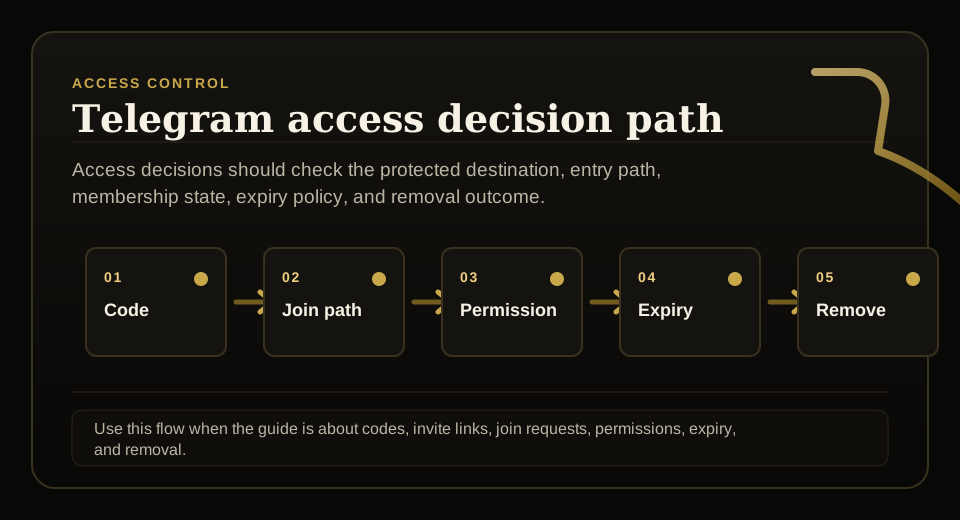
Implementation steps
- Define the setup job: store the token outside public code, limit who can read it, rotate it after exposure or handoff uncertainty, and separate token access from membership evidence.
- Confirm the owner account, protected destination, membership record, support route, and token handling before launch.
- Collect proof: secret owner, storage location class, rotation date, deployment target, audit note, incident contact, and post-rotation smoke test.
- Run a clean member test for join, support, expiry, removal, and recovery behavior.
- Document the boundary: avoid sending tokens through chats, screenshots, docs, or repo commits where they can be copied outside the production workflow..
Separate BotFather setup from access truth
the bot token authenticates the bot with Telegram and can be revoked, so it should be treated like a production secret.
BotFather can shape bot identity and launch surfaces, but membership status, payment evidence, Telegram identity, expiry, and support history should live in the paid-access system.
See Telegram's official Bot API documentation for the current bot permissions, methods, and BotFather reference: https://core.telegram.org/bots/api
Lock down ownership and handoff
Paid access should not depend on an unclear setup account, a contractor-only bot owner, or a token that nobody can rotate.
For this workflow, the team should store the token outside public code, limit who can read it, rotate it after exposure or handoff uncertainty, and separate token access from membership evidence.
Make member-facing surfaces supportable
support agents need member lookup, not raw bot tokens.
Profile text, commands, menu buttons, and Mini App entry points should route users into reviewed status, renewal, redemption, or support paths.
Test before paid traffic
Useful evidence includes secret owner, storage location class, rotation date, deployment target, audit note, incident contact, and post-rotation smoke test.
avoid sending tokens through chats, screenshots, docs, or repo commits where they can be copied outside the production workflow.
FAQ
What is Telegram bot token security paid groups?
Keep the Telegram bot token in secure deployment secrets, rotate it if exposed, and never use token possession as proof of membership authority.
Is BotFather setup enough for paid Telegram access?
No. BotFather creates and configures the bot identity, but paid access still needs membership records, Telegram identity binding, payment evidence, support recovery, expiry rules, and removal proof.