Quick takeaways
- Keep bot tokens, project API keys, payment secrets, and webhook secrets out of frontend code and public repos.
- Use membership status, Telegram identity, plan, expiry, and support evidence before changing access.
- Limit who can create codes, extend time, resend access, or remove members.
- Security reviews should include recovery paths, not only normal checkout paths.
Review the security controls a paid Telegram membership bot needs before it handles private groups, access codes, payments, support overrides, and expired-member removal.
Use this guide when the main risk is unsafe entry, leaked access, expired members staying inside, or admins changing permissions manually.
Next read: Telegram Bot Admin Permissions for Paid Groups.
How this guide was produced
Every guide is written for the same paid-access workflow: payment evidence, Telegram identity, plan status, support lookup, and expiry enforcement.
Published by KickThemBot from product documentation, launch runbooks, integration tests, and paid-access operating procedures.
Access-control planning: private destinations, access codes, join paths, bot permissions, expiry policy, and removal tests. Automation may assist drafting and page generation; indexed guides are selected for a distinct user job and reviewed against the documented workflow. Claims avoid fake rankings and hidden guarantees.
To help admins make a safer access decision before moving members, payments, invite paths, or expiry rules.
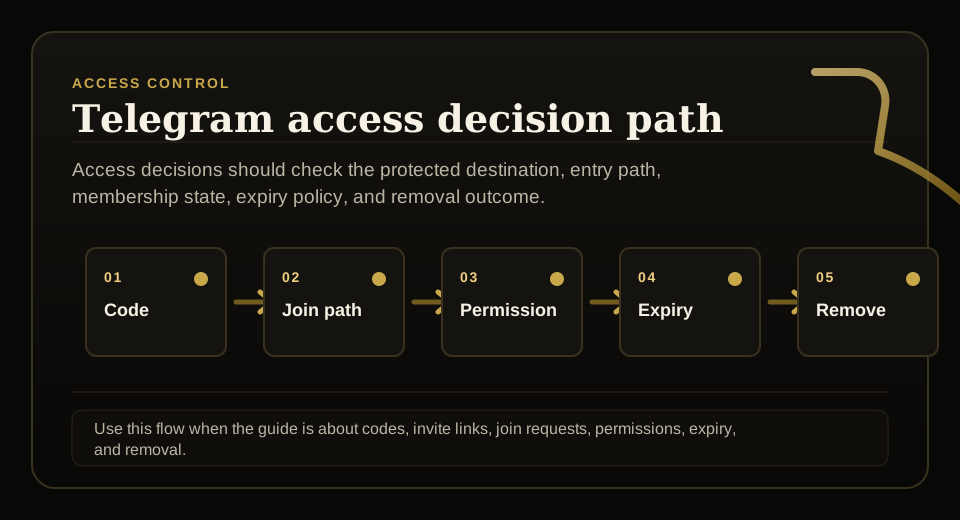
Implementation steps
- List every secret, token, API key, webhook secret, and admin account involved in paid access.
- Map each access-changing action to the actor allowed to perform it and the evidence required.
- Test code redemption, renewal, cancellation, manual override, recovery, and removal with least-privilege permissions.
- Review logs for enough evidence to explain access decisions without exposing secrets or private payment data.
Protect every secret in the chain
Paid Telegram access can touch a bot token, payment webhook secret, project API key, checkout integration, and support tooling.
None of those values should appear in browser JavaScript, public pages, source control, screenshots, analytics payloads, or support transcripts.
Secure the access decision
The access decision should come from membership state, not from a forwarded link, a chat message, or a support shortcut.
A secure workflow checks plan, status, expiry, payment source, access-code redemption, and Telegram identity before private entry changes.
Limit high-risk admin actions
Manual extensions, code creation, recovery, refund handling, and member removal can all change who gets paid access.
Give those actions to the smallest practical admin group and log who approved each change.
Review recovery paths like production paths
Many leaks happen through support recovery, not the main checkout path.
Wrong-account recovery, lost-code recovery, and manual invoice cases should still use controlled codes, identity checks, and audit notes.
FAQ
What is the biggest security risk for a paid Telegram membership bot?
The biggest risk is usually an access path that bypasses membership state, such as a permanent invite link, manual support approval without evidence, or exposed API credentials.
Should Telegram membership API keys be used in frontend code?
No. Project API keys and payment webhook secrets should stay server side in trusted environments, never in public frontend code or static pages.