Quick takeaways
- Track the right metrics: net paid members, plan revenue, renewal state, refunds, manual credits, grace periods, and active Telegram access.
- Tie every metric back to evidence: payment source, membership source of truth, Telegram user ID, plan, paid-through date, access destination, support note, and owner adjustment.
- The decision is to show whether revenue numbers match the members who should currently have Telegram access.
- The claim boundary is clear: avoid revenue dashboards that count checkout events but cannot explain who has access or why.
Use Telegram membership revenue dashboard to connect paid Telegram revenue, member status, payment evidence, Telegram identity, support exceptions, and access outcomes without overclaiming finance truth.
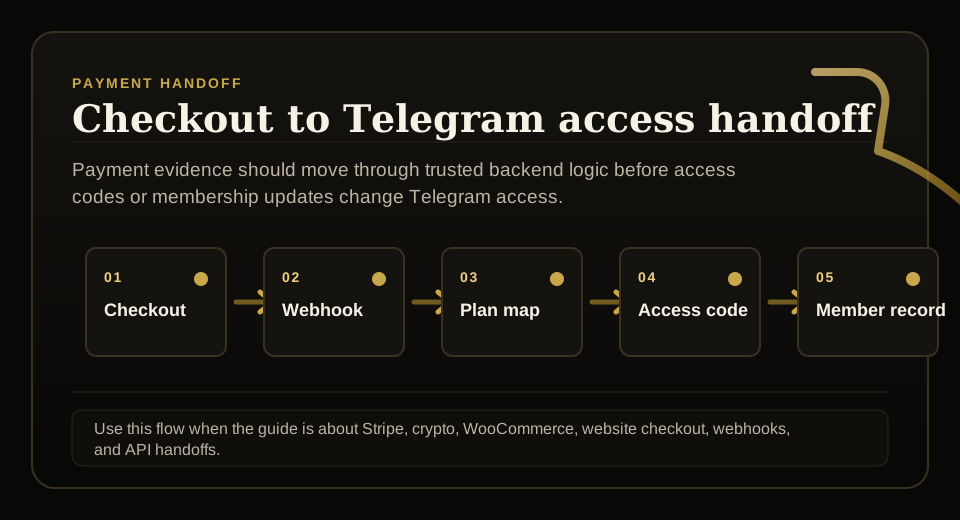
Use this guide when checkout, webhooks, renewals, invoices, or external payment evidence must become a reliable Telegram access event.
Next read: Telegram Membership KPI Dashboard.
How this guide was produced
Every guide is written for the same paid-access workflow: payment evidence, Telegram identity, plan status, support lookup, and expiry enforcement.
Published by KickThemBot from product documentation, launch runbooks, integration tests, and paid-access operating procedures.
Payment-handoff planning: Stripe, crypto, website checkout, server-side events, access-code redemption, renewals, and support evidence. Automation may assist drafting and page generation; indexed guides are selected for a distinct user job and reviewed against the documented workflow. Claims avoid fake rankings and hidden guarantees.
To help admins make a safer access decision before moving members, payments, invite paths, or expiry rules.
Implementation steps
- Define the reporting job for membership revenue dashboard: show whether revenue numbers match the members who should currently have Telegram access.
- Choose metrics that reflect the operating reality: net paid members, plan revenue, renewal state, refunds, manual credits, grace periods, and active Telegram access.
- Connect source evidence before reporting: payment source, membership source of truth, Telegram user ID, plan, paid-through date, access destination, support note, and owner adjustment.
- Document the reporting boundary: avoid revenue dashboards that count checkout events but cannot explain who has access or why.
Start with operating metrics
Paid Telegram reporting should not start with a chart library. It starts with the decisions owners and support need to make.
For this workflow, the useful metrics are net paid members, plan revenue, renewal state, refunds, manual credits, grace periods, and active Telegram access.
Keep revenue tied to membership truth
A payment event, checkout order, crypto note, or revenue total is not enough on its own. The report should still know which Telegram account, plan, and access destination the money relates to.
The evidence scope should include payment source, membership source of truth, Telegram user ID, plan, paid-through date, access destination, support note, and owner adjustment.
Turn reporting into action
Revenue analytics should help owners decide where renewals, pricing, support workload, access exceptions, or migration cleanup need attention.
The practical decision is to show whether revenue numbers match the members who should currently have Telegram access.
Keep finance claims narrow
These guides are operating reports, not tax advice, accounting systems, or guarantees of future revenue. They should support reviewable business decisions.
The page should avoid revenue dashboards that count checkout events but cannot explain who has access or why.
FAQ
What is Telegram membership revenue dashboard?
It is a dashboard that connects membership revenue to the actual paid Telegram access state behind each member.
Should revenue analytics control Telegram access?
No. Revenue analytics can reveal risk and trends, but access decisions should still resolve through membership status, payment evidence, Telegram identity, support review, and removal proof.