Quick takeaways
- A support answer dataset should use approved answers and clear escalation instead of guessing about paid access.
- The planning work should collect reviewed Q&A, support policies, member-facing wording, forbidden claims, unknown-answer responses, and escalation metadata.
- Useful proof includes question, answer, source, owner, segment, allowed audience, sensitive flag, review date, and change history.
- Claim boundaries matter: avoid using raw meeting transcripts or customer chats as direct answers without review, cleanup, and source ownership.
Prepare a Telegram support bot answer dataset with reviewed Q&A, source labels, forbidden topics, escalation notes, VIP/public scope, and update cadence.
Use this guide when support requests, tickets, shared inboxes, live chat, or escalation rules need to stay tied to membership status before access changes.
Next read: Telegram Support Knowledge Base Bot.
How this guide was produced
Every guide is written for the same paid-access workflow: payment evidence, Telegram identity, plan status, support lookup, and expiry enforcement.
Published by KickThemBot from product documentation, launch runbooks, integration tests, and paid-access operating procedures.
Support-operations planning: request intake, ticket state, assignment, SLA, member lookup, Telegram identity, escalation, and access outcome. Automation may assist drafting and page generation; indexed guides are selected for a distinct user job and reviewed against the documented workflow. Claims avoid fake rankings and hidden guarantees.
To help admins make a safer access decision before moving members, payments, invite paths, or expiry rules.
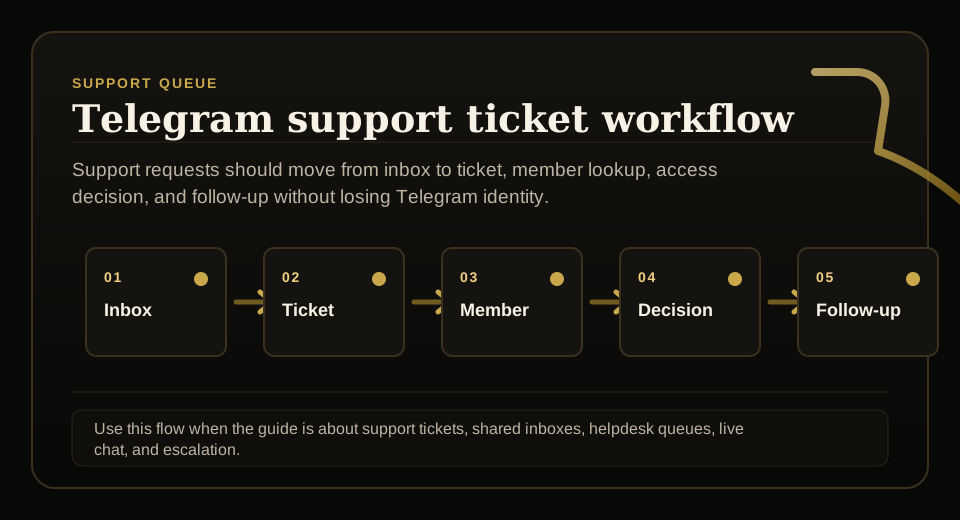
Implementation steps
- Define the support scope: collect reviewed Q&A, support policies, member-facing wording, forbidden claims, unknown-answer responses, and escalation metadata.
- Build the evidence and answer source: question, answer, source, owner, segment, allowed audience, sensitive flag, review date, and change history.
- Separate public answers, VIP/member support, technical troubleshooting, and access changes before launch.
- Set the safety boundary: avoid using raw meeting transcripts or customer chats as direct answers without review, cleanup, and source ownership.
Define what the support bot is allowed to answer
A Telegram support bot should begin with scope, not with a generic prompt.
For this answer dataset guide, the team should collect reviewed Q&A, support policies, member-facing wording, forbidden claims, unknown-answer responses, and escalation metadata.
Use reviewed answers and visible sources
The safest support automation starts from owner-reviewed answers, policy notes, and clear no-answer fallbacks.
The useful support evidence is question, answer, source, owner, segment, allowed audience, sensitive flag, review date, and change history.
Escalate membership and billing decisions
Paid Telegram support often requires membership status, Telegram identity, payment evidence, and owner judgment.
The bot can collect context and route the case, but access restores, refunds, VIP exceptions, and sensitive promises should follow reviewed workflows.
Prevent unsupported AI support claims
KickThemBot planning references Mr. Chatter-style support boards and Q&A-backed setup, but the website should not pretend AI can safely decide every member case.
The page should avoid using raw meeting transcripts or customer chats as direct answers without review, cleanup, and source ownership.
FAQ
What is Telegram support bot answer dataset?
It is the reviewed Q&A and policy dataset that a Telegram support bot can safely use for member-facing answers.
Should an AI support bot change Telegram access automatically?
Not by default. It should collect context and escalate account-specific access changes unless the membership source of truth, policy, and permissions clearly support the action.