Quick takeaways
- A ticket routing workflow should connect every request to membership status and Telegram identity before access changes.
- Support tickets are safer when they show payment evidence, plan, expiry, owner, status, and last access event together.
- Automation can collect context, but refunds, wrong-account fixes, manual extensions, and removals need explicit support rules.
- The final reply should leave a support note and a recorded access outcome for future renewal, billing, or moderation questions.
Map a Telegram ticket routing workflow for paid groups so access, payment, identity, refund, moderation, and owner-review cases reach the right support path.
Use this guide when support requests, tickets, shared inboxes, live chat, or escalation rules need to stay tied to membership status before access changes.
Next read: Telegram Support Queue for Paid Membership Teams.
How this guide was produced
Every guide is written for the same paid-access workflow: payment evidence, Telegram identity, plan status, support lookup, and expiry enforcement.
Published by KickThemBot from product documentation, launch runbooks, integration tests, and paid-access operating procedures.
Support-operations planning: request intake, ticket state, assignment, SLA, member lookup, Telegram identity, escalation, and access outcome. Automation may assist drafting and page generation; indexed guides are selected for a distinct user job and reviewed against the documented workflow. Claims avoid fake rankings and hidden guarantees.
To help admins make a safer access decision before moving members, payments, invite paths, or expiry rules.
Implementation steps
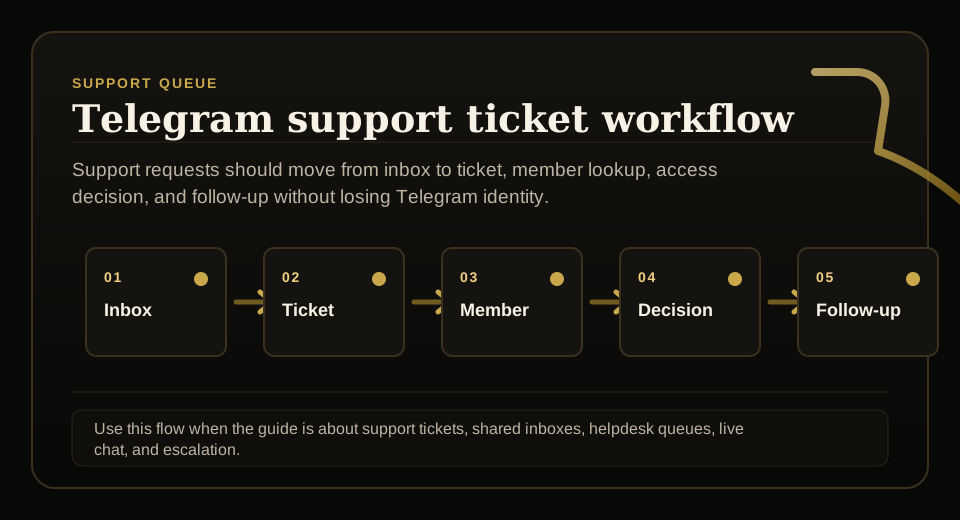
- Define which cases enter the ticket routing workflow: access recovery, failed payment, refund, wrong account, moderation appeal, plan upgrade, and owner exception requests.
- Capture requester details, Telegram identity, membership record, plan, payment evidence, current status, and protected destination.
- Set owner, priority, SLA, tags, and routing rules so support can classify each ticket by risk, required evidence, owner role, and whether a Telegram access change is possible.
- Resolve with a documented answer and access outcome: send each ticket to the right owner with a clear next action and prevent unsupported access restores.
Make the routing workflow visible
Paid Telegram support breaks when requests stay inside scattered chats, screenshots, or private admin memory.
A useful ticket routing workflow gives each request a visible state, owner, priority, and next action before anyone changes group access.
Start from Telegram identity and member status
Most paid-community support cases are really access-state questions: who paid, which Telegram account is attached, and whether the member should currently be inside.
Support should see the buyer record, Telegram ID or username history, plan, expiry date, payment source, and last access event together.
Route risky cases to the right owner
Low-risk questions can use templates, but access recovery, refunds, chargebacks, wrong-account fixes, and manual extensions need stronger review.
The routing rule should explain when support can classify each ticket by risk, required evidence, owner role, and whether a Telegram access change is possible.
Close with an access outcome
A ticket is not finished when the member receives a reply. It is finished when the membership state and Telegram access outcome match the evidence.
The close note should show whether support chose to send each ticket to the right owner with a clear next action and prevent unsupported access restores.
FAQ
What is a Telegram ticket routing workflow?
It classifies Telegram support requests and sends them to the right person or queue based on membership status, payment evidence, and access risk.
Should a ticket routing workflow replace membership records?
No. It should sit beside the membership source of truth so support can answer faster without granting, extending, or removing access from incomplete context.