Quick takeaways
- Member tracking should be scoped to groups and channels where the bot has the right permissions.
- Join, leave, ban, approval, and removal events become more useful when tied to membership status.
- Telegram identity should be stored with payment evidence, support notes, and expiry dates.
- Tracking output should support access recovery and removal proof, not surveillance claims.
Use a Telegram member tracking bot for paid groups without overclaiming API visibility: track allowed join, leave, status, Telegram identity, membership, support, and removal evidence.
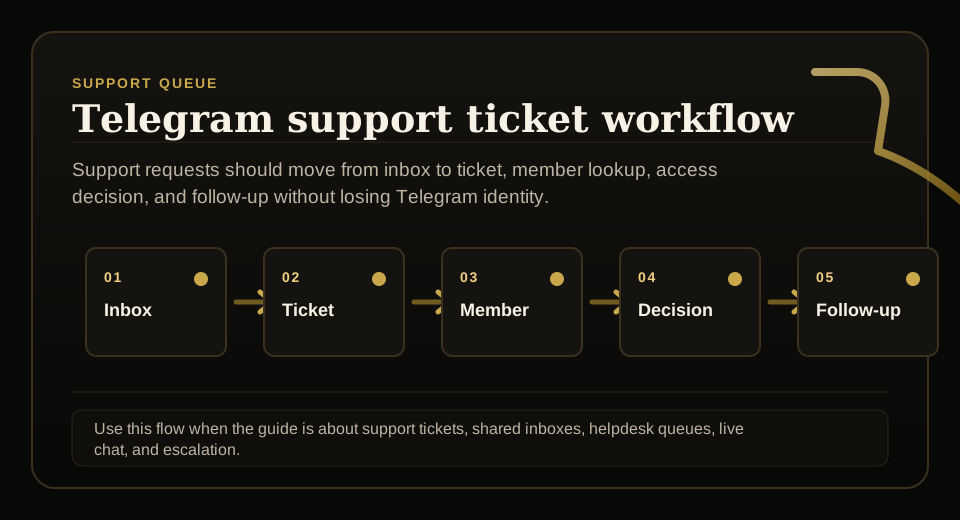
Use this guide when support requests, tickets, shared inboxes, live chat, or escalation rules need to stay tied to membership status before access changes.
Next read: Telegram Group Membership Database: Fields Paid Admins Should Track.
How this guide was produced
Every guide is written for the same paid-access workflow: payment evidence, Telegram identity, plan status, support lookup, and expiry enforcement.
Published by KickThemBot from product documentation, launch runbooks, integration tests, and paid-access operating procedures.
Support-operations planning: request intake, ticket state, assignment, SLA, member lookup, Telegram identity, escalation, and access outcome. Automation may assist drafting and page generation; indexed guides are selected for a distinct user job and reviewed against the documented workflow. Claims avoid fake rankings and hidden guarantees.
To help admins make a safer access decision before moving members, payments, invite paths, or expiry rules.
Implementation steps
- Define the protected groups, channels, bot permissions, and member events the workflow must observe.
- Bind each tracked Telegram identity to the membership record before using events for access decisions.
- Store join, leave, approval, removal, and support events beside plan, expiry, and payment evidence.
- Test first join, duplicate join, voluntary leave, expired-member removal, reactivation, and support lookup.
Scope tracking to allowed events
A bot can only track useful member status events where it is present and has the needed rights.
Do not build product promises around seeing groups or history the bot cannot access.
Connect events to membership status
A join event is not the same as an active paid membership.
The tracking workflow should compare Telegram identity, plan, expiry, and payment evidence before access changes.
Make support lookup faster
Support should see when a member joined, left, was removed, redeemed a code, or needed manual review.
That history helps recover access without issuing broad invite links.
Keep removal proof
Expired-member removal should be visible as an event tied to the membership record.
That proof helps admins confirm that billing state and Telegram access did not drift apart.
FAQ
What can a Telegram member tracking bot track?
It can track events it is allowed to receive in chats where it is installed with the right permissions, then connect those events to Telegram identity, membership status, support notes, and access decisions.
Can a bot track every group a Telegram user belongs to?
No. A paid-access workflow should avoid that claim and focus on member tracking inside the groups and channels the bot is authorized to manage.