Quick takeaways
- The API should expose plans, access-code provisioning, membership lookup, and renewal updates.
- Frontend pages should never hold project API keys.
- Support tools should read member status from the same record that access automation uses.
- Polling and webhooks need clear ownership so CRM data does not drift from access state.
Use a Telegram membership API to keep plans, access codes, membership lookup, renewals, and support decisions aligned across checkout and Telegram.
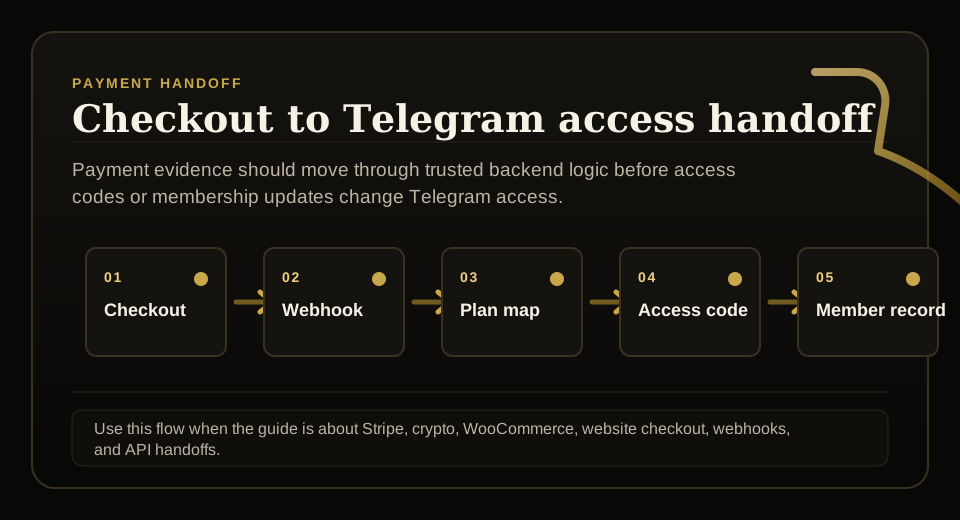
Use this guide when checkout, webhooks, renewals, invoices, or external payment evidence must become a reliable Telegram access event.
Next read: Telegram Membership API Integration Guide.
How this guide was produced
Every guide is written for the same paid-access workflow: payment evidence, Telegram identity, plan status, support lookup, and expiry enforcement.
Published by KickThemBot from product documentation, launch runbooks, integration tests, and paid-access operating procedures.
Payment-handoff planning: Stripe, crypto, website checkout, server-side events, access-code redemption, renewals, and support evidence. Automation may assist drafting and page generation; indexed guides are selected for a distinct user job and reviewed against the documented workflow. Claims avoid fake rankings and hidden guarantees.
To help admins make a safer access decision before moving members, payments, invite paths, or expiry rules.
Implementation steps
- List plans from the trusted backend before creating checkout-to-access mappings.
- Create access codes or membership updates only after payment is confirmed.
- Look up memberships by Telegram user ID, email, web user ID, or membership ID for support.
- Keep API keys server side and expose only support-safe status to frontend tools.
One API should answer the access question
The practical question is simple: should this Telegram account have access right now? The answer should not require checking a payment dashboard, a spreadsheet, an admin chat, and the bot history separately.
A membership API can make plan, status, expiry, source, and identity available to trusted backend systems.
Provision access from trusted backend events
Website purchases should call access-code or membership-update endpoints only after payment is confirmed server side.
That keeps API keys away from frontend code and makes support evidence easier to trace.
Give support useful lookup keys
Support commonly receives Telegram ID, username, email, web user ID, payment reference, or access code context.
The API should make the stable lookup path explicit so admins do not depend on screenshots or manual guesses.
Keep CRM and access state aligned
CRM agents can read membership state, but they should not invent a separate truth about access. If the CRM says active and the bot says expired, support will make the wrong call.
Read-only polling, event feeds, and future webhook designs should preserve the membership record as the access authority.
FAQ
What should a Telegram membership API include?
At minimum it should include plan lookup, access-code creation, membership lookup, renewal or membership update paths, and secure project-level authentication.
Can a frontend call a Telegram membership API directly?
Not when project API keys are involved. Payment verification and access-changing calls should stay on a trusted backend or secure server-side connector.