Quick takeaways
- Compliance planning should connect member promises to the actual access lifecycle.
- Privacy, terms, billing evidence, cancellation handling, and support lookup need documented owners.
- Policies should be visible enough for members and practical enough for admins to follow.
- The checklist should avoid unsupported guarantees and route local legal or tax questions to qualified review.
Use this paid Telegram community compliance checklist to plan privacy, terms, payment records, cancellation policy, support evidence, data requests, retention, and notification consent.
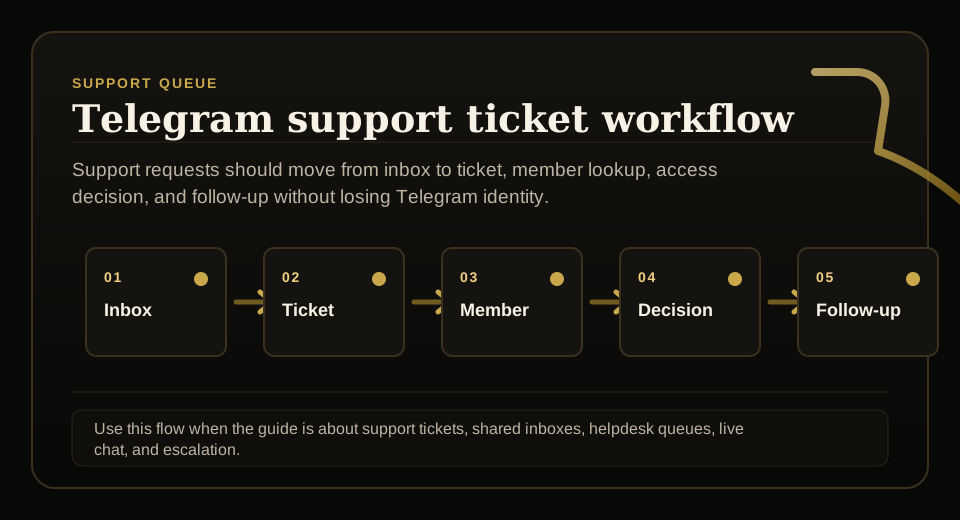
Use this guide when support requests, tickets, shared inboxes, live chat, or escalation rules need to stay tied to membership status before access changes.
Next read: Telegram Membership Bot Security Checklist.
How this guide was produced
Every guide is written for the same paid-access workflow: payment evidence, Telegram identity, plan status, support lookup, and expiry enforcement.
Published by KickThemBot from product documentation, launch runbooks, integration tests, and paid-access operating procedures.
Support-operations planning: request intake, ticket state, assignment, SLA, member lookup, Telegram identity, escalation, and access outcome. Automation may assist drafting and page generation; indexed guides are selected for a distinct user job and reviewed against the documented workflow. Claims avoid fake rankings and hidden guarantees.
To help admins make a safer access decision before moving members, payments, invite paths, or expiry rules.
Implementation steps
- List the member-facing promises: price, renewal, cancellation, refund, access duration, community rules, and support response expectations.
- Map the operational records behind those promises: Telegram ID, email, payment evidence, plan, expiry, support notes, and removal proof.
- Document who owns privacy requests, tax or invoice questions, failed payments, refund disputes, removals, and manual overrides.
- Review policies after checkout changes, pricing changes, platform migration, bot permission changes, or new data fields.
Start with member-facing promises
Paid communities create expectations about what the member gets, how long access lasts, and what happens after cancellation or expiry.
Those promises should match the checkout, Telegram onboarding, renewal reminders, support scripts, and removal behavior.
Map promises to operational records
A promise is hard to enforce if the team cannot find the member record, payment evidence, Telegram identity, plan, expiry date, or support history.
The compliance checklist should connect every promise to a record that support can verify.
Assign policy owners
Privacy requests, receipts, refunds, tax questions, failed removals, and account recovery should not depend on one admin remembering the rule.
Assign an owner, evidence source, escalation path, and review cadence for each policy area.
Review before the workflow changes
New checkout surfaces, new countries, new plans, affiliate campaigns, and support automation can all change the policy surface.
Treat policy review as part of launch operations rather than a document that sits apart from the Telegram workflow.
FAQ
What should a paid Telegram compliance checklist include?
It should include member promises, privacy practices, payment evidence, terms, cancellation and refund policy, data requests, retention rules, support ownership, and access-removal outcomes.
Can a membership bot solve compliance by itself?
No. A bot can enforce access state, but operators still need clear policies, records, support procedures, and qualified review for legal, tax, or jurisdiction-specific questions.