Quick takeaways
- Access incidents should be triaged by member impact and whether private access changed incorrectly.
- Containment may mean rotating links, disabling a stale handoff, pausing code generation, or holding support overrides.
- Recovery should protect legitimate paid members without keeping unpaid access alive.
- The post-incident review should update checkout, webhook, support, and removal tests.
Prepare an incident response runbook for paid Telegram access problems: leaked invites, failed removals, webhook issues, stale checkout handoffs, and support escalations.
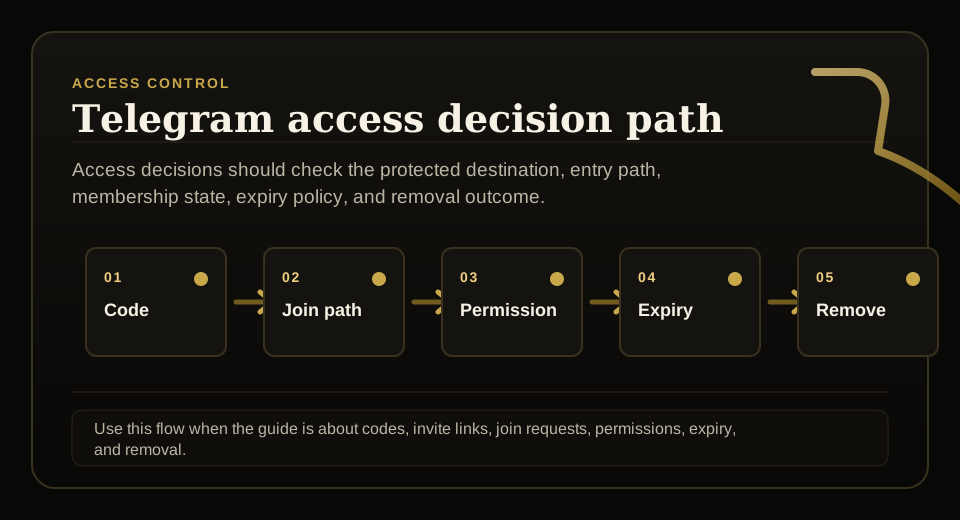
Use this guide when the main risk is unsafe entry, leaked access, expired members staying inside, or admins changing permissions manually.
Next read: Telegram Invite Link Management for Paid Groups.
How this guide was produced
Every guide is written for the same paid-access workflow: payment evidence, Telegram identity, plan status, support lookup, and expiry enforcement.
Published by KickThemBot from product documentation, launch runbooks, integration tests, and paid-access operating procedures.
Access-control planning: private destinations, access codes, join paths, bot permissions, expiry policy, and removal tests. Automation may assist drafting and page generation; indexed guides are selected for a distinct user job and reviewed against the documented workflow. Claims avoid fake rankings and hidden guarantees.
To help admins make a safer access decision before moving members, payments, invite paths, or expiry rules.
Implementation steps
- Classify the incident: leaked link, failed removal, missing access, duplicate access, webhook failure, or support override error.
- Freeze the risky path and preserve logs, payment references, access-code state, and Telegram membership evidence.
- Fix the access state by rotating links, reissuing controlled codes, restoring legitimate members, or removing unpaid accounts.
- Document root cause, affected members, communication, and tests that prevent the same incident from recurring.
Classify the access problem first
A leaked invite link, a failed removal, a delayed webhook, and a wrong-account recovery case need different responses.
Start by identifying whether the issue incorrectly granted access, incorrectly removed access, or left support unable to verify status.
Contain the active risk
If a link leaked, rotate or disable it. If a webhook is duplicating access, pause the handler or block duplicate event processing. If support is bypassing status, hold manual approvals.
Containment should be narrow enough to avoid punishing legitimate members while stopping the risky path.
Recover with controlled evidence
Legitimate paid members may need a fresh code, a corrected membership record, or a clear support message.
Unpaid or expired access should be removed through the bot or reviewed manually if bot permissions failed.
Turn the incident into a test
The final review should update launch tests, webhook idempotency checks, support lookup scripts, and removal-failure procedures.
If the same incident can happen again with no alert, the runbook is not finished.
FAQ
What should admins do first after a paid Telegram invite link leaks?
They should contain the link by rotating or disabling it, then use membership records and access-code evidence to separate legitimate paid members from unauthorized joins.
Should a paid Telegram access incident trigger refunds automatically?
Not automatically. Refunds depend on policy and impact. The first priority is to correct access state, preserve evidence, and communicate clearly with affected members.