Quick takeaways
- Webhook retries should update one membership record, not create uncontrolled duplicate access.
- Idempotency keys should include the payment event, membership, plan, and intended access action.
- Refund, cancellation, renewal, and failed-payment events need ordering rules.
- Every failed webhook should leave support-visible evidence.
Plan idempotent Stripe, website checkout, and automation webhook handling so Telegram access is not duplicated, skipped, or granted from stale events.
Use this guide when checkout, webhooks, renewals, invoices, or external payment evidence must become a reliable Telegram access event.
Next read: Telegram Membership Webhook Checklist for Stripe and Website Checkout.
How this guide was produced
Every guide is written for the same paid-access workflow: payment evidence, Telegram identity, plan status, support lookup, and expiry enforcement.
Published by KickThemBot from product documentation, launch runbooks, integration tests, and paid-access operating procedures.
Payment-handoff planning: Stripe, crypto, website checkout, server-side events, access-code redemption, renewals, and support evidence. Automation may assist drafting and page generation; indexed guides are selected for a distinct user job and reviewed against the documented workflow. Claims avoid fake rankings and hidden guarantees.
To help admins make a safer access decision before moving members, payments, invite paths, or expiry rules.
Implementation steps
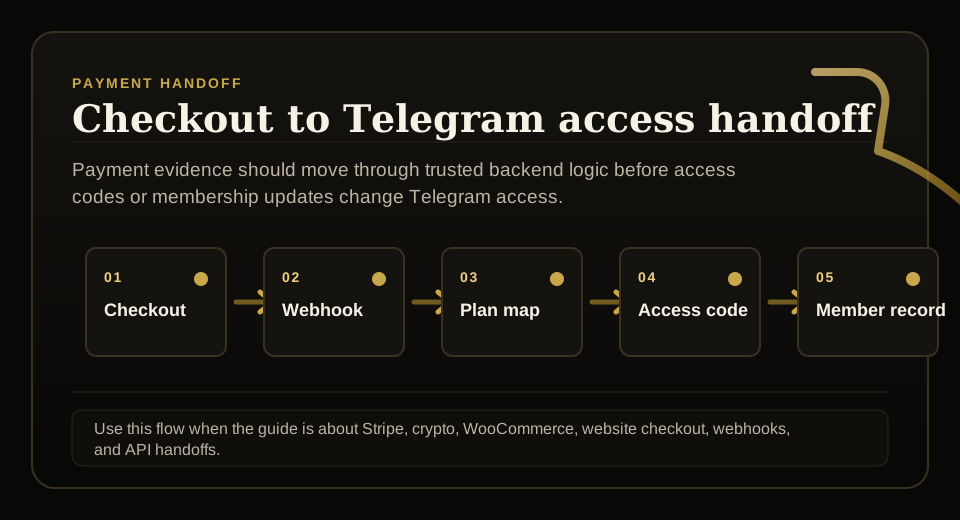
- Identify the event ID or stable payment reference from the checkout provider.
- Map the event to the member, plan, destination, and intended access action.
- Store whether the action already ran before issuing a code, renewal, invite, or removal.
- Log duplicates, conflicts, retries, and failed downstream access changes for support review.
Webhook retries are normal
Stripe, website checkout systems, and automation tools may send the same event more than once. That behavior protects delivery, but it can break paid access if the membership layer treats every delivery as a new sale.
The access workflow should be built so repeated events arrive safely.
Choose idempotency keys deliberately
A useful key usually combines provider event ID, payment reference, project, plan, buyer, and intended membership action.
The goal is to know whether this exact access change already happened before creating another code or extending access again.
Handle event ordering
Renewals, cancellations, refunds, failed payments, and chargebacks can arrive in a confusing order. The membership record should apply a clear rule instead of whichever event arrived last.
Support should see both the current access state and the underlying event history.
Make failures visible
A webhook can confirm payment but fail while creating an access code or updating the membership. That is not a silent success.
The system should log the failed step and make it easy for support to retry safely without granting access twice.
FAQ
Why does webhook idempotency matter for Telegram memberships?
It prevents duplicate access codes, duplicate renewals, repeated invites, and conflicting removals when payment or automation events retry.
What should a Telegram access webhook log?
It should log event ID, buyer, plan, membership, intended action, current result, duplicate status, failure reason, and support-safe payment reference.